Builds and synergies
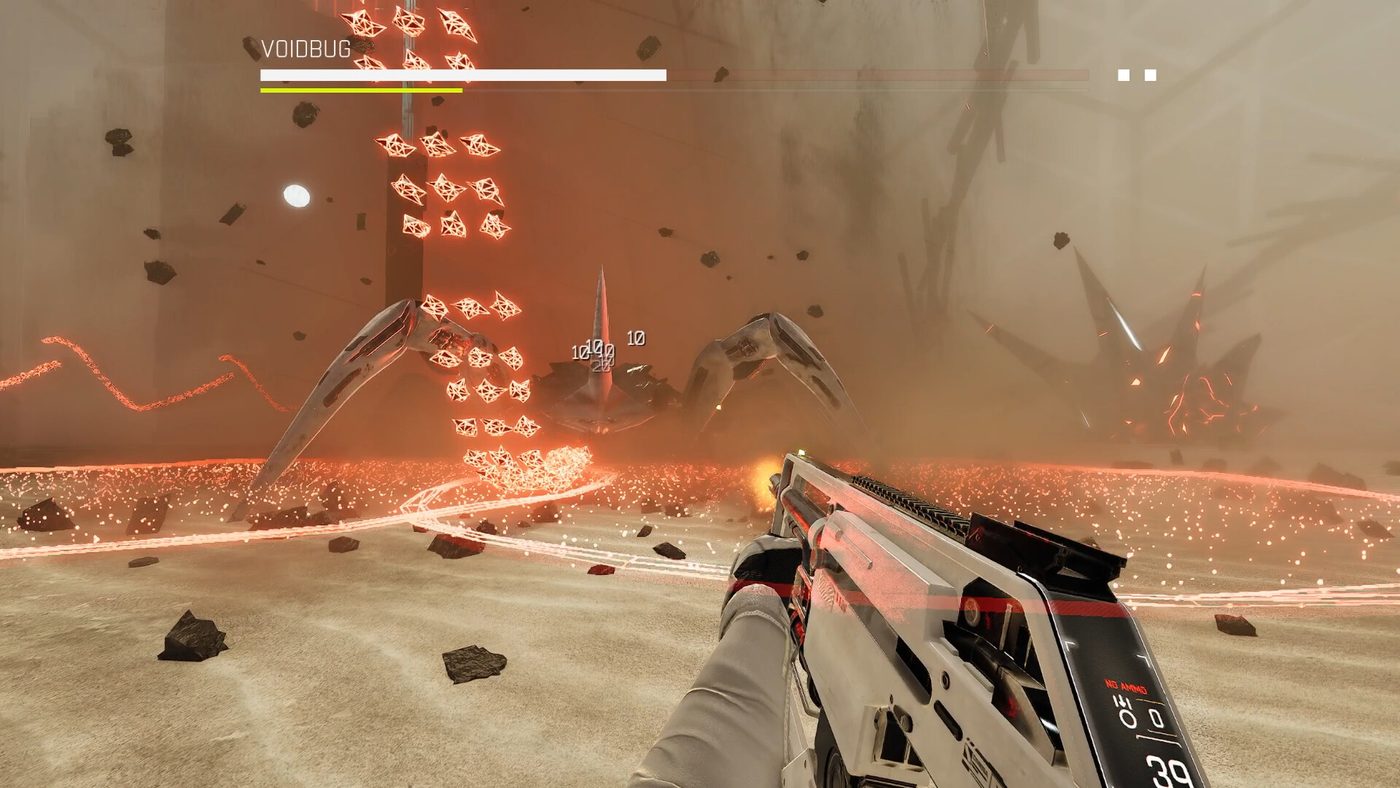
Five engines carry most runs: ricochet, freeze, melee scaling, ability crit windows and tether lightning. Each needs a slot invoker, a survival rule and a credit source to survive past Zone 02.
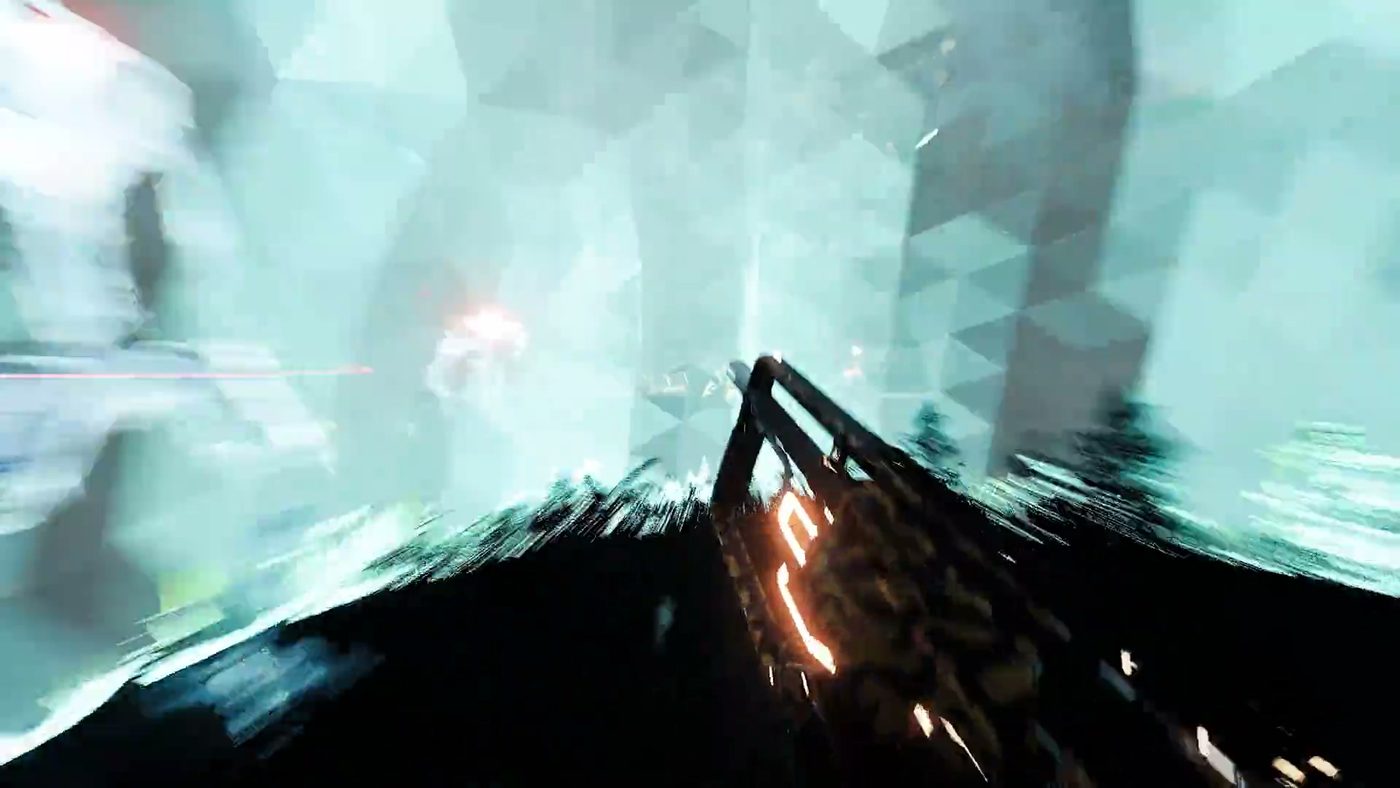
Builds in VOID/BREAKER are not about finding the strongest module. They are about finding two effects that multiply each other, then spending the rest of the run making sure both keep firing.
What follows are shells rather than tier lists: each one names the engine, the support, and the failure mode.
The ricochet engine
Engine: Chain Reaction (weapon mod, Epic) — projectiles ricochet to the closest target. Support: Repeater Effects, which adds additional ricochets and increases the maximum arcs.
This is the most self-contained damage engine in the game because it scales with enemy density rather than with your aim. In a crowded arena every shot becomes several shots, and the arcs find targets you cannot see.
Failure mode: single-target fights. Against a boss with no adds, the ricochets have nowhere to go and the engine does nothing. Swap the support module for a critical-damage mod before a boss.
The freeze engine
Engine: Cold Snap (passive) — taking damage freezes all enemies. Support: Ice Breaker (passive) — enemies inflicted with ice always receive a critical hit.
Cold Snap turns a mistake into a window; Ice Breaker converts that window into damage. The pairing is unusual because the trigger is you getting hit, which means the build gets stronger as the run gets worse.
Failure mode: enemies that do not take elemental stacks, and the 50% damage reduction the game applies when your element matches the enemy's. Since HARD RESET removed elemental immunity, the ceiling is lower than it looks but the floor is reliable.
The melee engine
Engine: melee damage scaling (baseline since RECALIBRATION) Support: Laceration stacking from Serrated Edge, Sharp Debris and Critical Wounds, plus KNEE/BREAKER for slide damage and Drop Matrix for air damage.
Melee scales with enemy health, so this engine does not fall off in later zones the way pre-RECALIBRATION melee did. Laceration stacks increase melee damage further, which means the build wants volume of applications rather than one big hit.
Failure mode: SHIELDED enemies are immune to shooting but require melee, so this build actually counters them. The real failure mode is aerial enemies, which you cannot reach.
The ability engine
Engine: Critical Overdrive — all damage is critical for a short duration. Support: Catalyst Adapter, which makes any attack that could apply an elemental stack do so with 100% chance for a brief duration.
This is the highest-ceiling combination on paper: a window where everything crits and every hit applies its element. It is also the most timing-dependent, because both modules are abilities with cooldowns.
Failure mode: dying during the setup. Ability cooldowns ping audibly when ready since RECALIBRATION, which is the cue to stop holding them.
The crowd-control engine
Engine: Zeus Strike (passive) — enemies hit by gravity-tethered objects are struck by lightning. Support: anything that creates debris, plus Sharp Debris for Laceration on debris hits.
The tether is the most underused tool in the game, and this build makes it a primary weapon. Throw a chunk into a group, lightning chains, Laceration stacks, melee cleans up.
Failure mode: arenas with nothing to throw. Boss arenas always have debris; corridors sometimes do not.
What every build needs
Three slots are effectively mandatory regardless of engine:
- A slot invoker. Common slot invokers now reach in a 3-slot direction since RECALIBRATION, and extra slots are the resource every engine consumes.
- A survival rule. Cold Snap, a shield effect, or enough handling to never get caught reloading.
- A credit source. The Recycler hack, or enough discipline to skip shops you cannot afford.
How to test a build
Take it into Zone 02 rather than Zone 01. Zone 01 is forgiving enough that bad builds survive, and Zone 02's density is the first honest test of whether your engine scales with crowds.
If the build only works when enemies line up, it is not a build, it is a lucky run.
Modules that look good and are not
Three module types consistently underperform in practice, and the reason is always the same: they improve a number that does not decide fights.
Flat damage mods on a slow weapon. High Caliber lowers fire rate and raises damage. On a sniper that is a fair trade. On an SMG it removes the volume of fire that every proc-based engine depends on.
Defensive mods without a trigger. A damage reduction mod helps you survive a mistake; Cold Snap turns a mistake into a window. In a game where a mistake usually means three more hits incoming, the trigger is worth more than the mitigation.
Utility mods taken too early. Slot invokers are excellent and they do nothing on the first arena of a run, when you have two modules and no engine to support.
Adapting mid-run
A run gives you roughly three decision points: which route, which shop, and which module to drop when your slots are full. The third is the one players avoid.
Two rules make it easier. First, decide what the build is before the second boss and stop taking modules that do not serve it. Second, treat the Recycler as permission to be ruthless: a module you recycle is credits, and credits buy the module you actually need.
If a run is going badly, the honest move is often to stop investing and bank the Voidium. Meta progression persists; a run does not.
What the patch notes imply about design intent
RECALIBRATION's module list reads like a deliberate widening of build space: melee got six modules, ability mods got five, passive mods got five. The stated goal in the update post was to "broaden the mod pool, increase build diversity" — and the 19 modules delivered against a promised 18.
ASCENSION then changed the fire mode family so that every weapon has its own tailormade options. That is an admission that the previous fire mode mods were generic enough to be ignorable.
_Figures checked 4 November 2026 against official RECALIBRATION, ASCENSION and HARD RESET patch notes._