What VOID/BREAKER is
A bullet hell roguelite FPS from solo developer Stubby Games, published by Playstack. Windows only, $29.99, English and Simplified Chinese, out of Early Access on 4 November 2026.
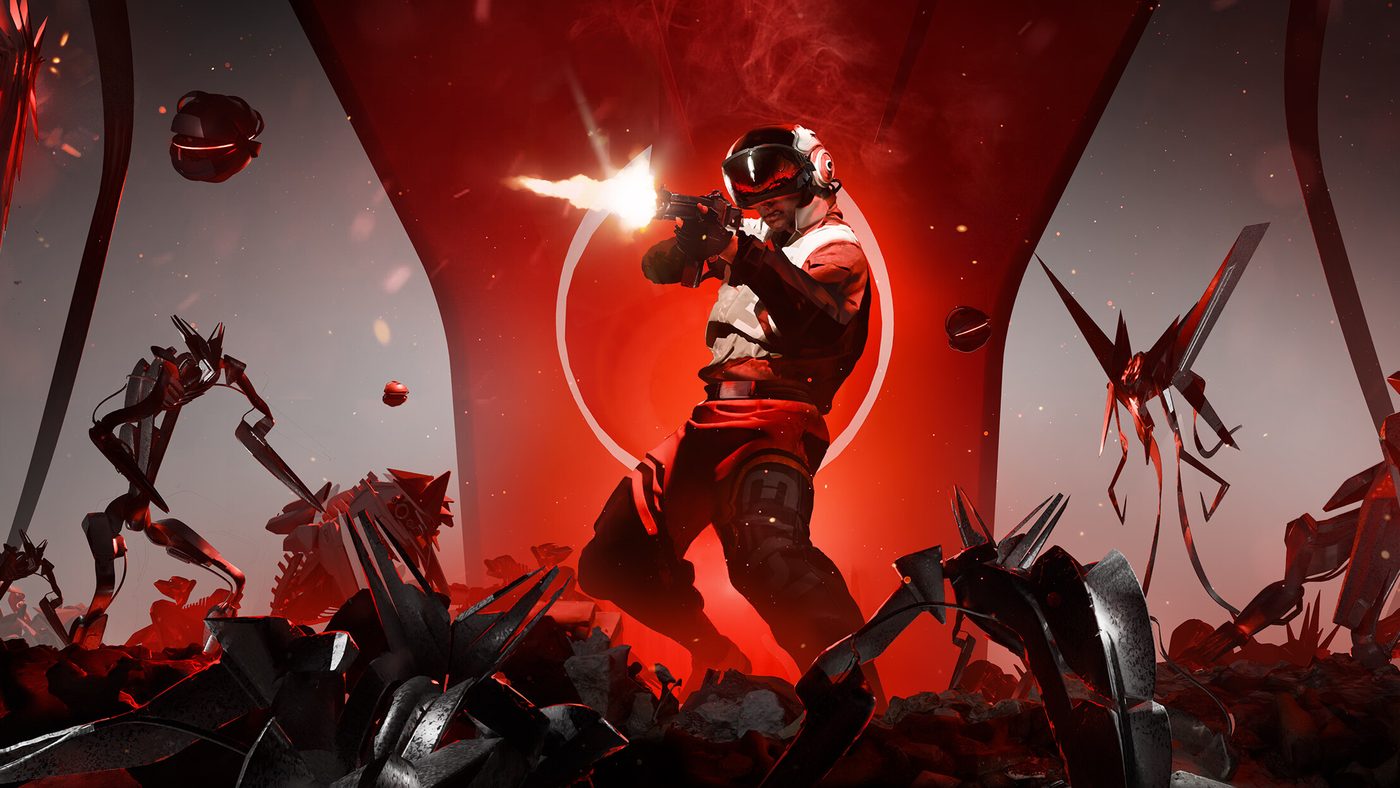
You wake up on a loop you did not agree to. A voice calling itself IDRIS runs the place, the machines are its hands, and every time you die it puts you back at the start. VOID/BREAKER is a first-person shooter about getting out anyway, built by one developer and published by Playstack.
The pitch is three systems bolted together and tuned against each other: bullet-hell density, roguelite runs, and a gun-modding bench that turns a pistol into something the game has no name for. You move fast, you shoot faster, and you rebuild the weapon between fights.
What kind of game it is
Fast-paced bullet hell roguelite FPS. That is the store's own phrasing, and it is accurate in a specific way: the bullets are the terrain. Enemy fire arrives in patterns you are meant to read and slide through, not tank. Deaths are quick, restarts are quicker, and the run structure keeps handing you new toys to break the pattern with.
It is single-player only. No co-op, no PvP, no live service. One save, Steam Cloud, full controller support including DualShock and DualSense.
Who made it
Stubby Games is Daniel Stubbington, a solo developer. Before this he made The Entropy Centre (2022), a Portal-adjacent puzzle game. VOID/BREAKER is his pivot to movement shooters, and the store page says so in as many words: a passion project from a solo dev chasing "dynamic FPS gameplay and roguelites".
Playstack publishes. The same label handles the game's store presence, the price announcements, and the Supporter's Pack, which is why most of the paperwork you will read about this game is signed by a publisher team while the design notes are signed "Daniel".
The state of the game today
| Fact | Value |
|---|---|
| Early Access launch | 19 August 2025 |
| 1.0 launch | 4 November 2026 |
| Price | $29.99 / €26.99 / £23.99 |
| Platform | Windows only (no Mac, no Linux build) |
| Languages | English (full audio) and Simplified Chinese |
| Achievements | 13 before 1.0, with 5+ more listed on the 1.0 roadmap |
| Steam Deck | Verified |
| Reviews | 2,554 total, 93% of 2,042 English reviews positive |
Fourteen months separate the Early Access build from 1.0, and they were not quiet months: four named major updates (HARD RESET, RECALIBRATION, ASCENSION, and the smaller CHAOS TERMINAL) added two zones, two weapons, a melee rework, wallrunning, and enough modules to fill a spreadsheet. The 1.0 release page has the launch-day table; the Early Access timeline has the receipts.
What a run actually looks like
You drop into a zone, clear arenas, and pick up modules. Modules are the whole game. They attach to a weapon in slots, and each one changes how that weapon behaves: a projectile that freezes, a ricochet that hunts the nearest target, an ability that hands you infinite ammo for six seconds. Stack the right three and the gun stops being the gun you picked up.
Between arenas you spend Voidium in shops, unlock hacks in the hub, and choose routes. Some routes are fragmented zones, optional side areas that hide schematics — the blueprints that add new modules to the loot pool permanently.
At the end of a zone there is a boss. There are five of them before 1.0, named in the achievement list: GRAVAXIS, VOIDBUG, BLOCKMAW, TRIDENT, VOIDWEAVER. Each one gates a chunk of story and a chunk of your kit.
What it is not
It is not a looter shooter. There are no rarity-tinted assault rifles with +12% stats dropping from a boss; the loot is modules, and the weapon is a chassis you keep.
It is not a narrative game with shooting attached. There is a story — Desmond, the loop, IDRIS, a copy of you called 1473 — and it is delivered in broadcast voice lines and boss introductions, but the loop is the point.
It is not a 40-hour campaign. It is a run-based game with a story spine, and the endgame is the Chaos Terminal: modifiers, ratings, missions, and chassis to unlock with the fragments you earn.
If you want to know whether the shooting feels right before spending anything, there is a free demo and your progress carries over. That is covered in the demo guide.
Where the loop lives
The structure is a hub and a set of zones. The hub is a containment area with terminals: a hacks screen for permanent upgrades, a chassis terminal for weapon variants, a schematic researcher that turns blueprints into loot, and a shop. You leave the hub, fight through a zone, kill its boss, come back, spend what you earned, and go out again.
Hacks are the meta layer. They are bought with Voidium and decryptors, they persist across runs, and they are the reason a bad run still moves the account forward. RECALIBRATION changed the rule so that decrypting a hack automatically grants its first tier, which removes the old two-step of unlocking a node and then paying again to use it.
Modules are the run layer. They drop, they go into slots, and they are lost when the run ends. That split is the whole design: permanent power is slow and small, temporary power is fast and absurd, and the interesting decisions happen in the temporary half.
The look and the sound
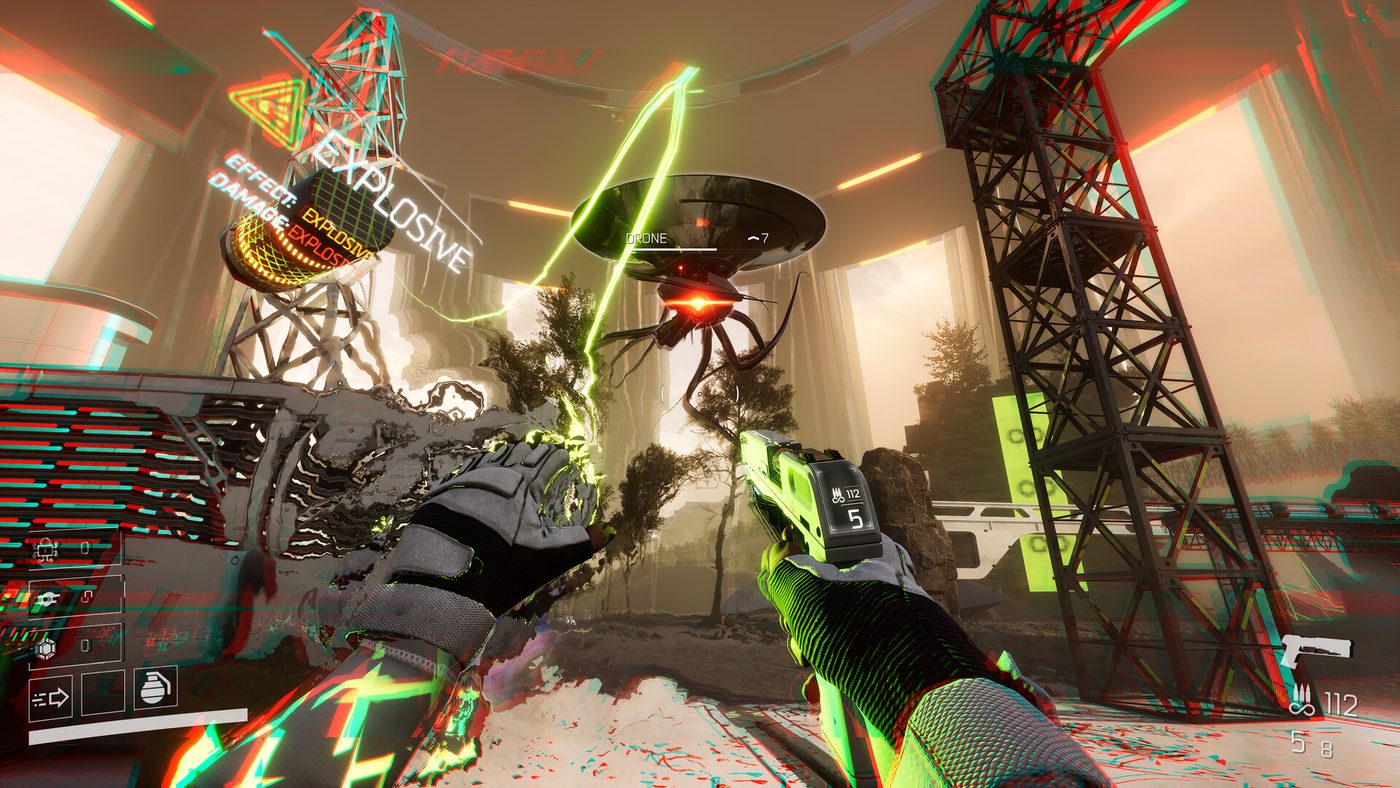
The art direction is warm decay rather than clean sci-fi. Rust, sand, bone-white concrete, and then the game's own interface slammed on top in acid yellow. Damage smears the edges of the screen with red and cyan, which reads instantly in a screenshot and tells you what genre you are in before you fire.
Joe Ford did the music, and the soundtrack ships as part of the Supporter's Pack at 1.0. The boss themes are the part people mention unprompted — Daniel called out the VOIDWEAVER track specifically when ASCENSION launched.
_Figures checked 4 November 2026 against the Steam store page and official Stubby Games / Playstack announcements._