System requirements
Minimum is a GTX 970 and 8 GB of RAM, recommended is an RTX 2070 and 16 GB, and both tiers need 12 GB of storage. The engine moved to Unreal 5.7 in April 2026 with FSR and DLSS support.
The store page lists two tiers, and they are further apart than most games' minimum and recommended specs. That gap is worth reading carefully, because the game's engine changed after launch.
The official specs
| Component | Minimum | Recommended |
|---|---|---|
| OS | Windows 10 | Windows 11 |
| Processor | Intel Core i5-4590 or AMD FX 8350 | Intel Core i5-8400 or AMD Ryzen 5 2600 |
| Memory | 8 GB RAM | 16 GB RAM |
| Graphics | NVIDIA GTX 970 or AMD Radeon R9 290 | NVIDIA RTX 2070 or AMD Radeon RX 5700 XT |
| DirectX | Version 11 | Version 12 |
| Storage | 12 GB available space | 12 GB available space |
Twelve gigabytes is small for a 2026 release, and it has not changed since Early Access. The game is not asset-heavy; it is projectile-heavy.
Why the recommended tier is so much higher
The minimum is a 2014-era GPU. The recommended is a 2018–2019 card with roughly three times the compute. That spread usually means one of two things: the minimum is technically true but unpleasant, or the recommended is aimed at high frame rates rather than at running the game at all.
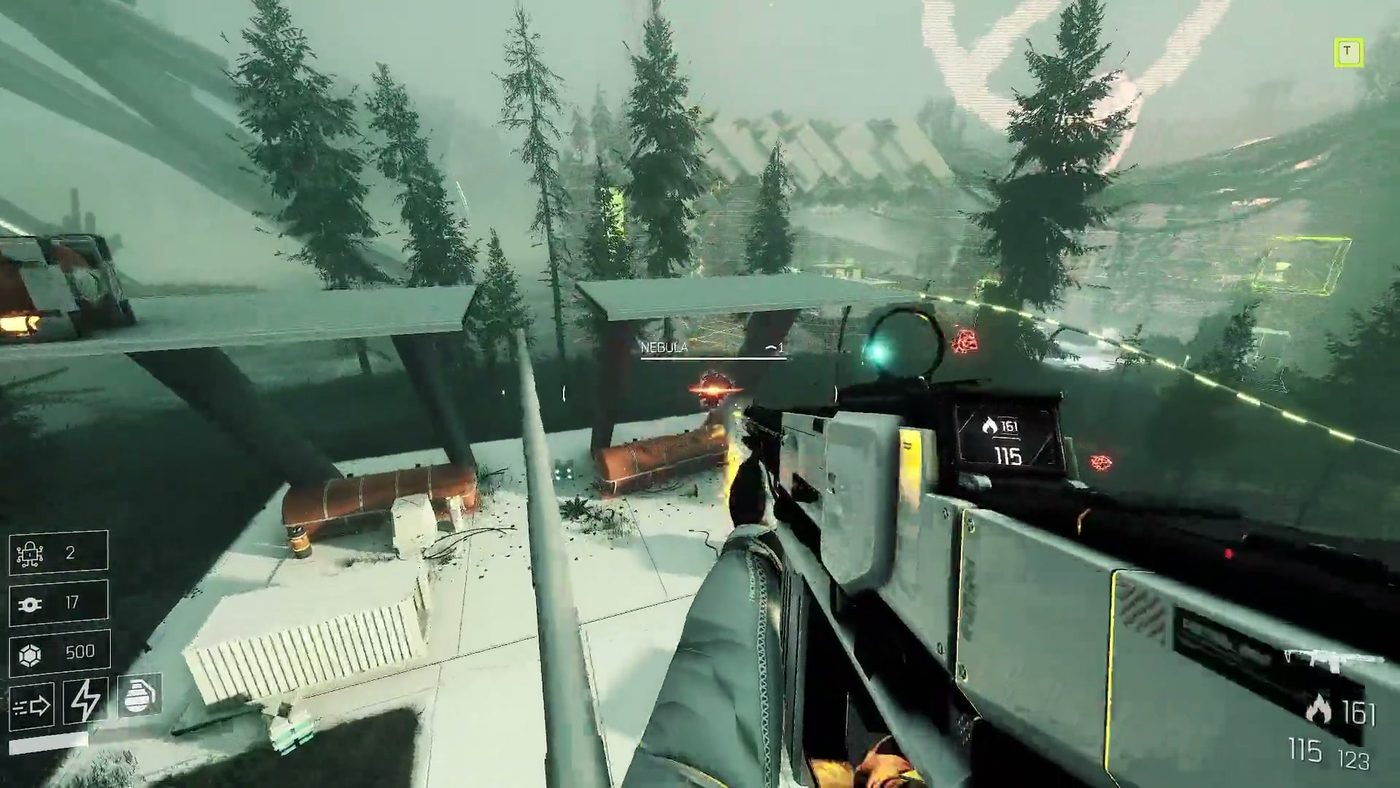
For a bullet hell shooter, frame rate is not a luxury. Reading projectile patterns at 40 frames per second is materially harder than at 90, and the game's difficulty is built on pattern reading. If your machine sits at the minimum, expect to lower resolution and settings to keep the frame rate up rather than to enjoy the visuals.
What the engine change did
RECALIBRATION moved the game to Unreal Engine 5.7. The patch notes for that update claim better performance across the board, improved rendering on lower-spec machines, FSR support, an updated DLSS, physics optimisations, and optimisations for firing many projectiles at once.
Those claims matter for this specific game because its worst-case load is not a cutscene, it is forty enemies firing simultaneously. The notes also mention slightly lower CPU usage when many enemies are present, from character movement optimisations.
Settings that buy performance
- FSR or DLSS, both supported. On the recommended tier, DLSS quality is usually the best trade.
- Bloom and fog toggles. Added in demo 0.9.2 for visual clarity; they are also the cheapest performance wins.
- Low latency mode. Reduces input latency at the cost of some performance — the opposite trade, and worth it if the game feels sluggish rather than slow.
- Sharpening slider. Added in RECALIBRATION; useful if you drop resolution and want the UI text to stay readable.
What is not specified
The store page does not publish a target frame rate, a resolution target, or a VRAM figure. It also does not specify SSD versus HDD, which for a 12 GB install is probably fine either way.
If you are below the minimum GPU, there is no official statement that the game will run, and the honest answer is to try the demo before buying.
The Deck comparison
Steam Deck Verified is a separate rating with its own performance check, covered on the Steam Deck page. A machine that meets the desktop minimum and a Deck are not equivalent, and Valve's rating is the relevant one for handheld.
Reading the spec lines for this game
Four of the six lines matter more than the others for a projectile-heavy shooter.
Processor. The minimum is a four-core Haswell-era chip; the recommended is a six-core Coffee Lake or a Ryzen 5 2600. The gap reflects how much of the game's load is enemy AI and projectile simulation on the CPU rather than rendering on the GPU.
Memory. 8 GB minimum, 16 GB recommended. The 16 GB recommendation is not about texture streaming — the install is only 12 GB — it is about headroom when many enemies are active.
Graphics. GTX 970 to RTX 2070 is a large jump. If you are in between, the game will run; the question is whether it holds frame rate during the Chaos Terminal modifiers that increase enemy counts.
DirectX. Minimum is DX11, recommended is DX12. Since the move to Unreal Engine 5.7 in April 2026, the DX12 path is the one the engine is built around.
Storage and first launch
12 GB of space has not changed since Early Access, which is unusual for a game that added two zones and roughly thirty modules. The reason is that the game's assets are compact and its complexity is systemic.
Two practical notes. First, Unreal Engine titles compile shaders on first launch, and the RECALIBRATION notes mention that the 5.7 upgrade fixed some crashes experienced during shader compilation — so if you have not launched since April 2026, expect a longer first load. Second, the game improved resolution handling when swapping between machines, which matters if you move between a desktop and a handheld.
Upgrading in the right order
If you are below the recommended tier and want to spend money sensibly, the order for this game is GPU, then memory, then CPU. The GPU carries the rendering; the memory carries the headroom; the CPU matters least unless you are already at the recommended GPU.
The cheapest upgrade of all is free: FSR is supported, and on the minimum tier it is the difference between a playable frame rate and a slideshow.
When the specs are not enough information
The store page publishes no frame rate target, no resolution target, and no VRAM requirement. That is normal for an indie release and unhelpful for a buyer on the fence.
The demo is the answer. It is a smaller install than the full game, it runs the same engine, and it will tell you more about your machine than any spec table.
_Figures checked 4 November 2026 against the Steam store system requirements panel for app 2615540._