Enemies and hazards
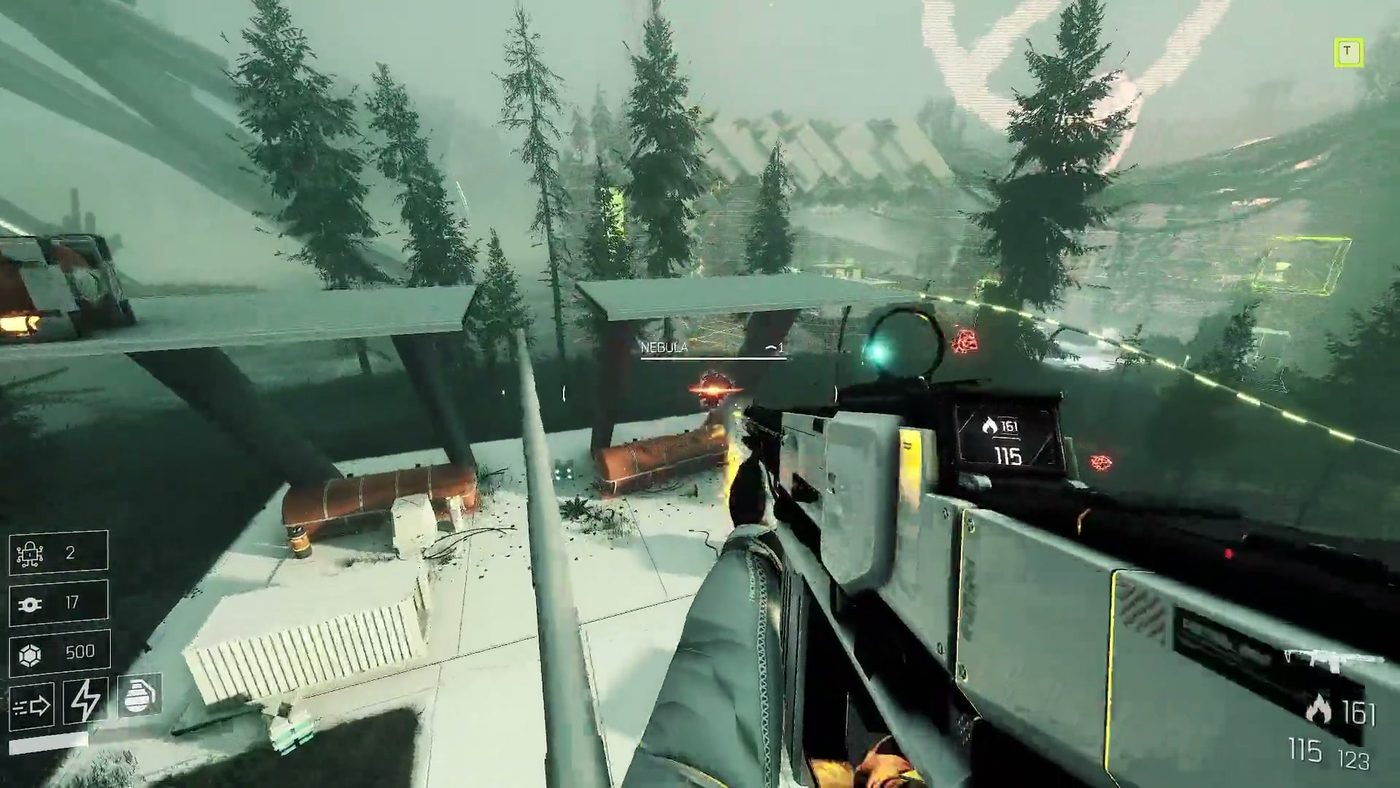
Named enemies include Dominion, Helix, Sentry, Mutt, Trixiom, Ironclad and Voidout. Two variants change the rules: SHIELDED requires a melee opener, Voltaic disables parts of your kit with EMPs.
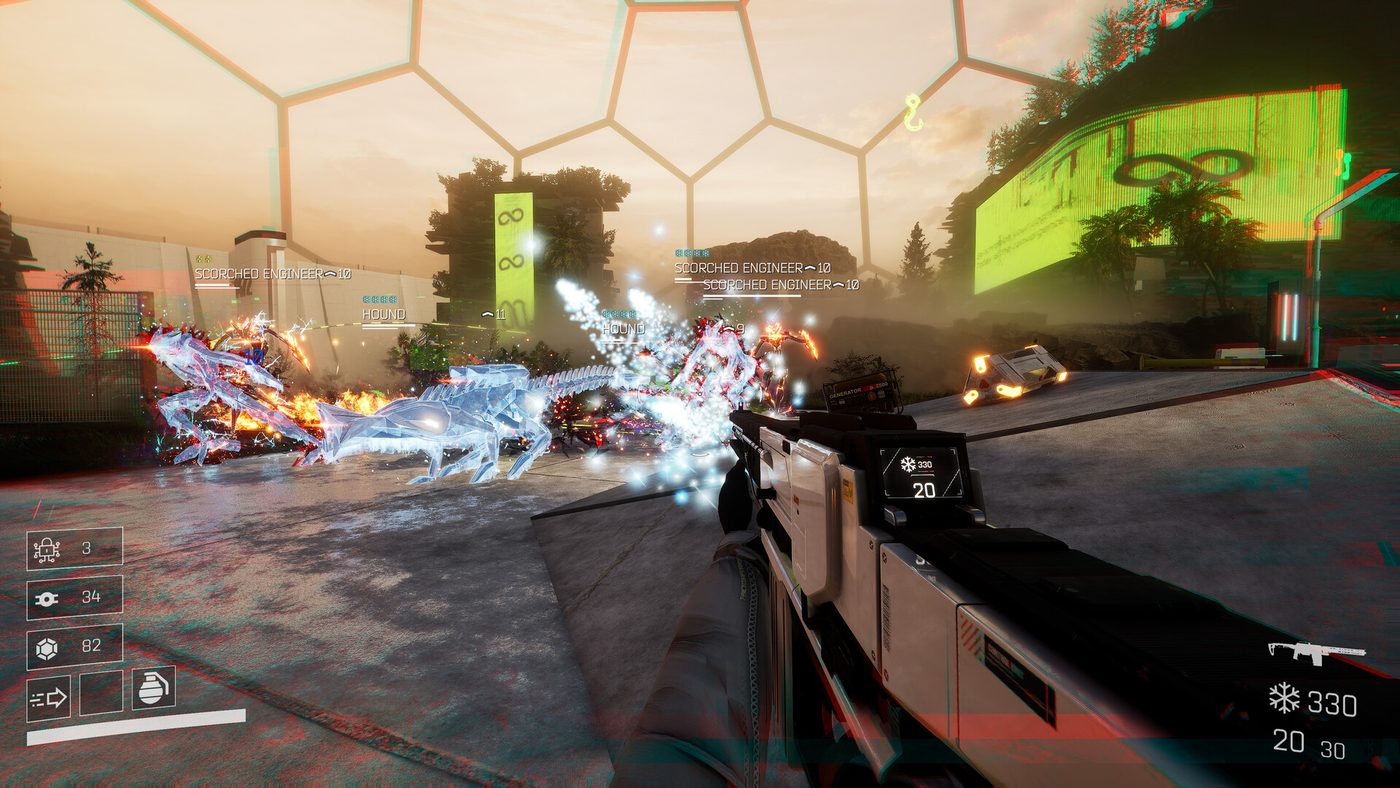
The enemy roster grew in every major update, and the official notes name most of them. What follows is the named list, the two variants that change how you fight, and the arena hazards that are not enemies at all.
Named enemies
| Enemy | Introduced | Behaviour, per official notes |
|---|---|---|
| Dominion | HARD RESET, Feb 2026 | Aerial, dimension-phasing |
| Helix | HARD RESET, Feb 2026 | Aerial bombardier, rushes the player on death |
| Sentry | HARD RESET, Feb 2026 | Non-arena enemy that lurks underground and strikes unexpectedly |
| Mutt | HARD RESET, Feb 2026 | Smaller, nimbler hound variant with a powerful forward leap |
| Trixiom | HARD RESET, Feb 2026 | Aerial, releases projectiles when damaged |
| Ironclad | ASCENSION, Jun 2026 | New enemy type for Zone 05 |
| Voidout | ASCENSION, Jun 2026 | New enemy type for Zone 05 |
Hounds, drones and turret-like enemies fill out the earlier zones. FORTIST is named in patch notes as an enemy that summons others and now destroys its summons on death, which makes killing it first a real decision rather than a habit.
The two variants that matter
SHIELDED. Added with HARD RESET. Shielded enemies take no damage from shooting; you have to melee them first. It is a single rule and it changes the shape of a fight, because it forces you into the range where bullet-hell games are least comfortable.
VOLTAIC. Added with ASCENSION. Voltaic enemies deploy EMPs that disable parts of your kit. Daniel's own note about them: they "force you to adapt on the fly", and they are among the most dangerous hostiles in the game. An EMP that turns off your dash during a pattern is a death sentence if you have not planned for it.
Arena hazards
Not everything trying to kill you is an enemy.
- Anomalies. Run modifiers that change the rules. STORM was added in ASCENSION and Daniel declined to explain it — "I'll let you discover that one yourself". Corruptions are the related system, with an EMP corruptor specifically named in demo patch notes.
- Obelisk modifiers. Anti-Heal is one of the named modifiers an obelisk can apply. These are visible before you accept them.
- Destructible geometry. Walls collapse, structures fall, and the debris is both a hazard and a weapon. Sharp Debris is a passive module that makes destruction debris apply Laceration.
- Boss debris. Boss attacks release tetherable chunks. They hurt if they hit you and hit hard if you throw them back.
How enemy design changed over time
The through-line in the patch notes is readability. Enemies in Biome 01 were given preferred engagement distances so they stop crowding into one blob. Enemy lasers and shockwaves got visual clarity passes. Health bar counts were capped to reduce screen clutter. Enemy armour health came down, and elite enemy presence on normal difficulty went up.
The net effect is a game that is harder in the aggregate and easier to read, which is the correct direction for a bullet hell.
What to do about each type
- Aerial enemies (Dominion, Helix, Trixiom) reward vertical aim and punish standing under them. Trixiom in particular gets worse the longer it lives, because it releases projectiles when damaged.
- Ground lurkers (Sentry) punish standing still. Keep moving through cleared arenas rather than treating them as safe.
- Shielded enemies require a melee opener. Build a melee mod into your kit if you are dying to these specifically.
- Voltaic enemies require a plan for losing your abilities. Kill them before they EMP, or keep a manual dodge in reserve.
- FORTIST summons; kill it before the summons accumulate, and note that its death now clears them.
The movement page covers the dash and tether mechanics these enemies are designed to test, and the bosses page covers the fights where they appear alongside something larger.
How to read an arena
The enemy list is less useful than the arena read, because most deaths come from a combination rather than a single enemy. Four questions, asked as you enter:
- What is on the ceiling? Aerial enemies are the ones that punish standing still, and Dominion, Helix and Trixiom all approach from above.
- What is on the floor that should not be? Sentry lurks underground. If the floor looks suspiciously clean in a zone that usually is not, assume it is not.
- Is anything glowing the wrong colour? Voltaic enemies signal EMPs. SHIELDED enemies signal that shooting will not work.
- What can I throw? Destruction debris, boss chunks, and anything the tether can reach. The answer is usually "more than you think".
Difficulty tuning, in the game's own words
The patch notes describe the direction of travel better than any tier list. Enemy armour health was reduced. Elite enemy presence on normal difficulty was increased. Mini-boss summons stopped being farmable for credits. Enemies of the same element as your projectile stopped being immune and started taking 50% reduced damage instead.
That last change is the one that quietly improved build variety: before it, an ice build could not fight ice enemies at all. After it, the worst case is a damage penalty rather than a dead run.
What is still unknown
Two enemy-adjacent systems have been named but not detailed in public: the STORM anomaly, which Daniel explicitly declined to explain, and the corruption system, which has an EMP corruptor variant named in demo notes but no published list of effects.
Both are discoverable in game and both are documented here only to the extent the official notes go. If you are looking for a complete corruption table, none has been published.
_Figures checked 4 November 2026 against official HARD RESET and ASCENSION patch notes._