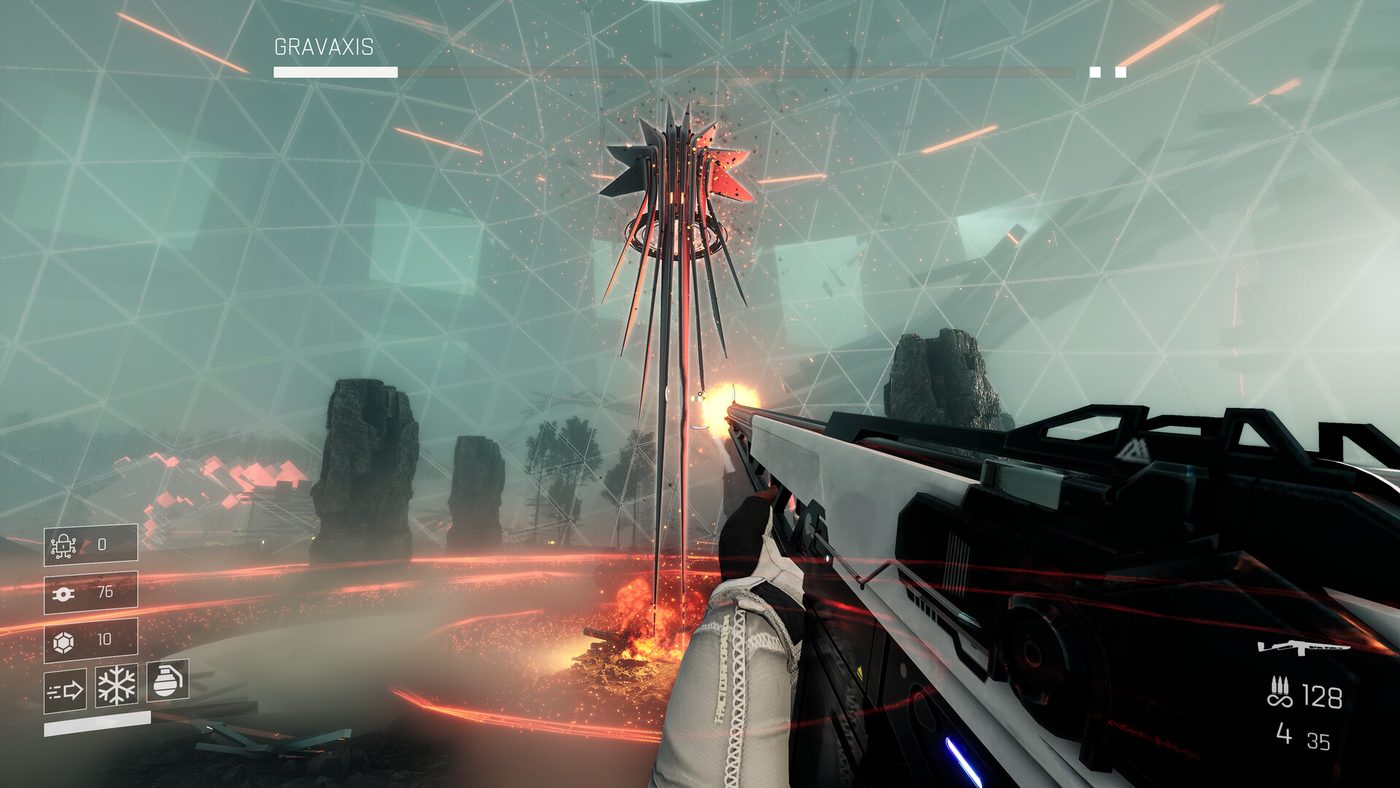
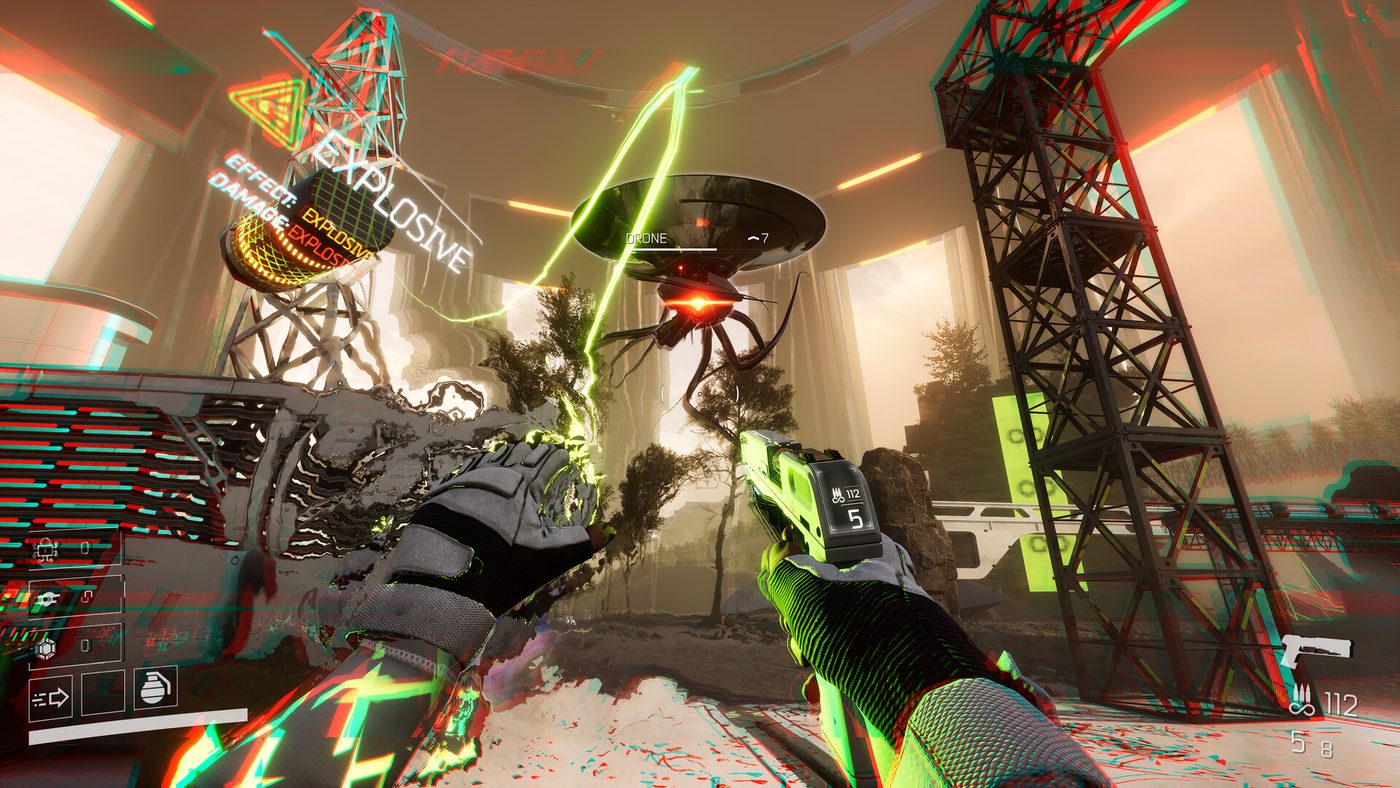
Movement and combat
Sprint, slide, dash with invincibility frames, wallrunning from Zone 04, grapple and the gravity tether. Melee now scales with enemy health, so it stays relevant in the last two zones.
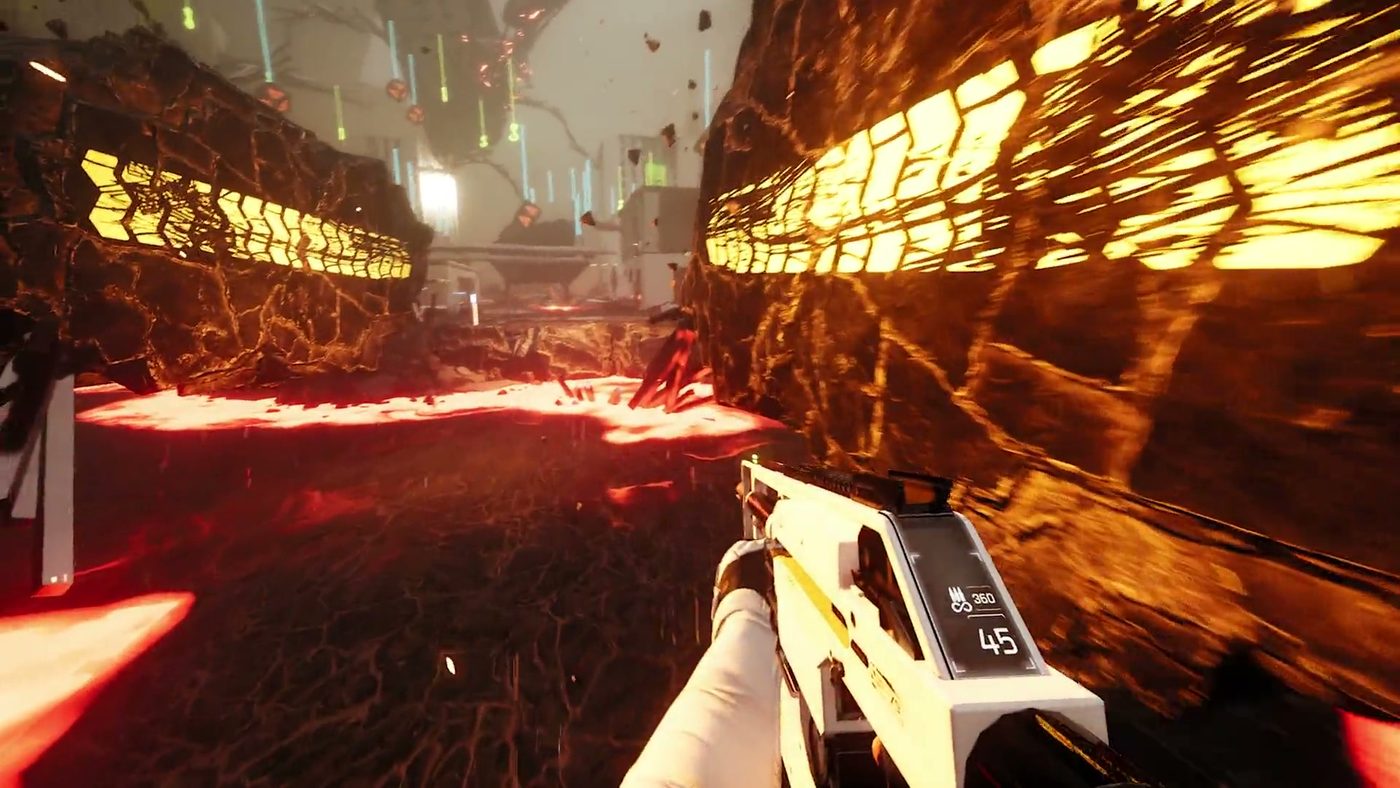
Movement is the skill ceiling in VOID/BREAKER, and it is the part that changed most during Early Access. At launch the game had sprint, slide, dash, grapple and ziprails. By 1.0 it also has wallrunning, a reworked melee, and a gravity tether that is bound to the interact key by default.
The movement set
| Move | Notes from official patches |
|---|---|
| Sprint | Auto Sprint added in demo 0.9.25 and carried into the main build |
| Slide | Starts from walking since the demo rework; faster if started while sprinting |
| Dash | Invincibility frames, demonstrated in a tutorial section that forces a projectile wall dash |
| Wallrun | Added with HARD RESET; detection and responsiveness improved in ASCENSION |
| Grapple | Grapple cancelling and automatic collision detection improved in HARD RESET |
| Ziprails | Slightly faster, maintain player momentum |
| Gravity tether | Same key as interact by default, rebindable |
Why the slide matters more than the dash
The dash is the flashy move: it has invincibility frames, it breaks projectile patterns, and the tutorial now explicitly teaches it. But the slide is the movement tool that changes how you cross an arena.
Sliding starts from a walk as of the demo rework, and it is faster when it starts from a sprint. That means the practical movement string is sprint, slide, fire, dash out of the slide, re-sprint. The slide carries momentum and keeps your hitbox low, which is why it is the answer to most projectile walls that are not solved by dashing through them.
Two modules extend this further: KNEE/BREAKER increases melee damage while sliding, and BUNNYHOP.XES drops a destructive mine when you jump out of a slide.
Wallrunning, and why it arrived late
Daniel originally designed movement to be "grounded, readable, and very deliberate" and explicitly did not plan to include wallrunning. The community asked for it continuously, and HARD RESET added it as a Community Voice feature.
Zone 04 was redesigned around it: sightlines, combat spaces and traversal routes all had to work with the new freedom. ASCENSION then improved wall run detection and responsiveness, which is the patch note that tells you the first version was not quite there.
The gravity tether
The tether picks up objects and throws them. It is the most underused mechanic in the game and the one that most directly converts into damage.
Three reasons it matters:
- Boss damage. Boss attacks release tetherable debris specifically so you can throw the arena back at them.
- Stagger. Thrown objects stagger. A thrown chunk in the middle of a crowd is a crowd control tool.
- Modules. Zeus Strike makes enemies hit by tethered objects get struck by lightning. Sharp Debris makes destruction debris apply Laceration. Both turn the tether into a damage engine rather than a utility.
Melee, after the rework
The melee system was rebuilt in RECALIBRATION. Melee damage now scales with enemy health, which means it stays relevant deep into runs instead of falling off in Zone 04. The scaling clamps the minimum damage rather than the maximum, so melee builds can still scale upward.
Laceration was added in the same update: enemies stacked with Laceration take increased melee damage, and more stacks means harder hits. Six new melee modules arrived with it — Melee Reclaim, Drop Matrix, KNEE/BREAKER, Focused Strike, Digistruct Bolt and Serrated Edge — plus Sharp Debris and Critical Wounds on the passive and weapon side.
The Severance hack was removed because it existed only to patch melee scaling. If you are following an older guide that recommends it, that advice is out of date.
Combat fundamentals
- Fire while moving. Stopping to aim is the most common cause of death in the first three zones.
- Stagger is a defensive resource. Use it to interrupt, not to extend a damage window you already have.
- Dash through, not away. Invincibility frames reward crossing a pattern rather than retreating from it.
- Reload behind cover you created. Destruction is a cover system if you use it that way.
The enemies page covers what these tools are being used against, and the builds page covers the modules that turn movement into damage.
Settings that change how movement feels
Five settings do more for the feel of the game than any module, and all five exist because of feedback.
| Setting | Where | Why it matters |
|---|---|---|
| Auto Sprint | Settings, added in demo 0.9.25 | Frees a finger for dash and tether |
| Dash activation mode | Keybinds: double-tap, short sprint press | Lets you dash without leaving the movement keys |
| Camera shake intensity | Video; low setting also reduces sprint shake | Motion sickness and pattern reading |
| ADS sensitivity + FOV blending | Added in demo 0.9.2 | Snappier aim without losing the wide view |
| Low latency mode + NVIDIA Reflex | Added in demo 0.9.0/0.9.2 | Input latency at the cost of some frames |
If the game feels floaty, the first thing to change is Auto Sprint, and the second is dash activation. Both are input problems disguised as movement problems.
The one habit that transfers between zones
Every zone rewards the same loop: move, fire, tether, dash. The vocabulary changes — wallrunning in Zone 04, EMP pressure from Voltaic enemies in Zone 05 — but the loop does not.
Players who struggle in the second half of the game usually have one of two problems: they stop moving to aim, or they never learned the tether. Both are fixable in Zone 01, and both are much harder to fix in Zone 05.
_Figures checked 4 November 2026 against official demo, HARD RESET, RECALIBRATION and ASCENSION patch notes._